Join us for an evening with Colin Drohan, celebrating his debut poetry collection It's Late, joined by local novelist Kathleen Boland.
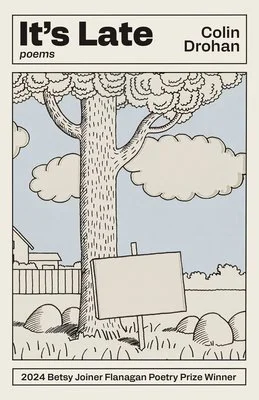
It's Late approaches the world with openness and affection, prioritizing wonder about plants, animals, and other people, as well as individual and communal pasts, presents, and futures as a guiding force. The voices behind these poems dwell in a state of perpetual curiosity. Colin Drohan's writing is full of awe but he also asks difficult questions about the world we inhabit and its present ecological crises, often discovering humor as a mechanism for real hope. It's Late imagines readers as close friends and confidants, written with a conversational quality that welcomes the absurdity of our daily lives.
"I thought again about how / it's all disappearing," the speaker says in the poem "Notes Toward an Apocalypse" in Colin Drohan's debut It's Late. "If there's a way / to write about anything else, I'm all ears." The collection, which Ocean Vuong calls "a rare debut that's both bold and tender, deeply considered yet wrought with quicksilver urgency," approaches the world with amusement and affection ("the loneliest whale in the world / is a blue it feels too easy") while also expressing an unshakeable anxiety about the future and anticipatory grief for all that we have to lose: "If the arborist comes / and finds a tree that's ruined / tell her I want her to lie to me. / I want to believe / the trees will live on."
Underneath the casual tone is a deep ache, that comes from knowing that, as Cynthia Cruz puts it in her blurb, "the end of the world is experienced as though it is not occurring." Even when the world seems to be falling apart around us, we go on, calling our friends, making soup, playing penny slots, walking the dog. "It's a wonder and a comfort," It's Late reminds us, "The sky is still there."
"In 'The Apocalypse is (Still) Disappointing,' the Slovenian philosopher Alenka Zupančič argues that the end of the world is no longer on the horizon—it has already begun. Zupančič's title would make a fitting subtitle for Drohan's It's Late, an understated study of the human subject absorbed in the everyday while the apocalypse unfolds around it. The collection's central revelation—that the end of the world is experienced as though it is not occurring—is brilliantly rendered throughout this breathtaking debut. As Drohan writes in 'You Expected From the World': 'We didn't understand / The beginning was the end / The song on the radio says / We'll all be gone by fall.' It's Late is the book about the end—which is to say, our contemporary moment—we have been waiting for."—Cynthia Cruz
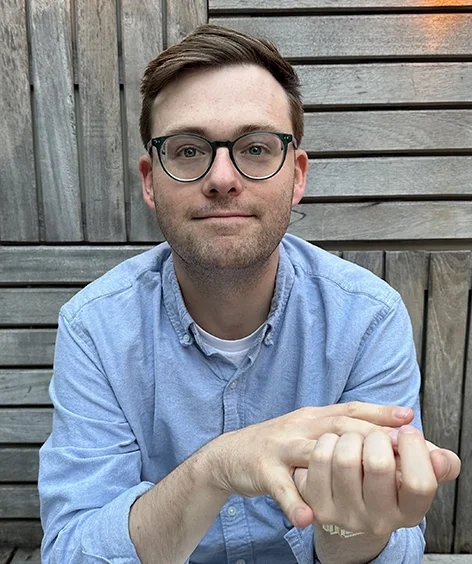
Colin Drohan's poetry collection It's Late won the Betsy Joiner Flanagan Award from Interim and will be published by the University of Nevada Press on December 1, 2026. He is from Chicago, and he earned an MFA from the University of Massachusetts Amherst, where he received the Karen Skolfield and Dennis Goeckel Award in Poetry. He was the Director of Writing Programs at Catapult, and he has taught writing and worked in student support at the University of Massachusetts Amherst, Landmark College, and the University of Texas at Austin. He is studying to become an archivist, and he lives in Brooklyn.
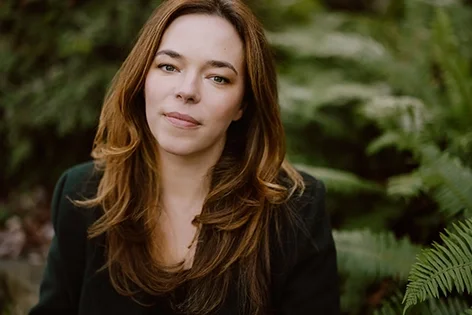
Kathleen Boland is the author of the novel Scavengers. Her fiction has appeared in Tin House, Conjunctions, and Gulf Coast, among other places, and she has received support from the Tin House Summer Workshop, the Bread Loaf Writers' Conference, and the Vermont Studio Center. She lives in Portland, Oregon with her family.